



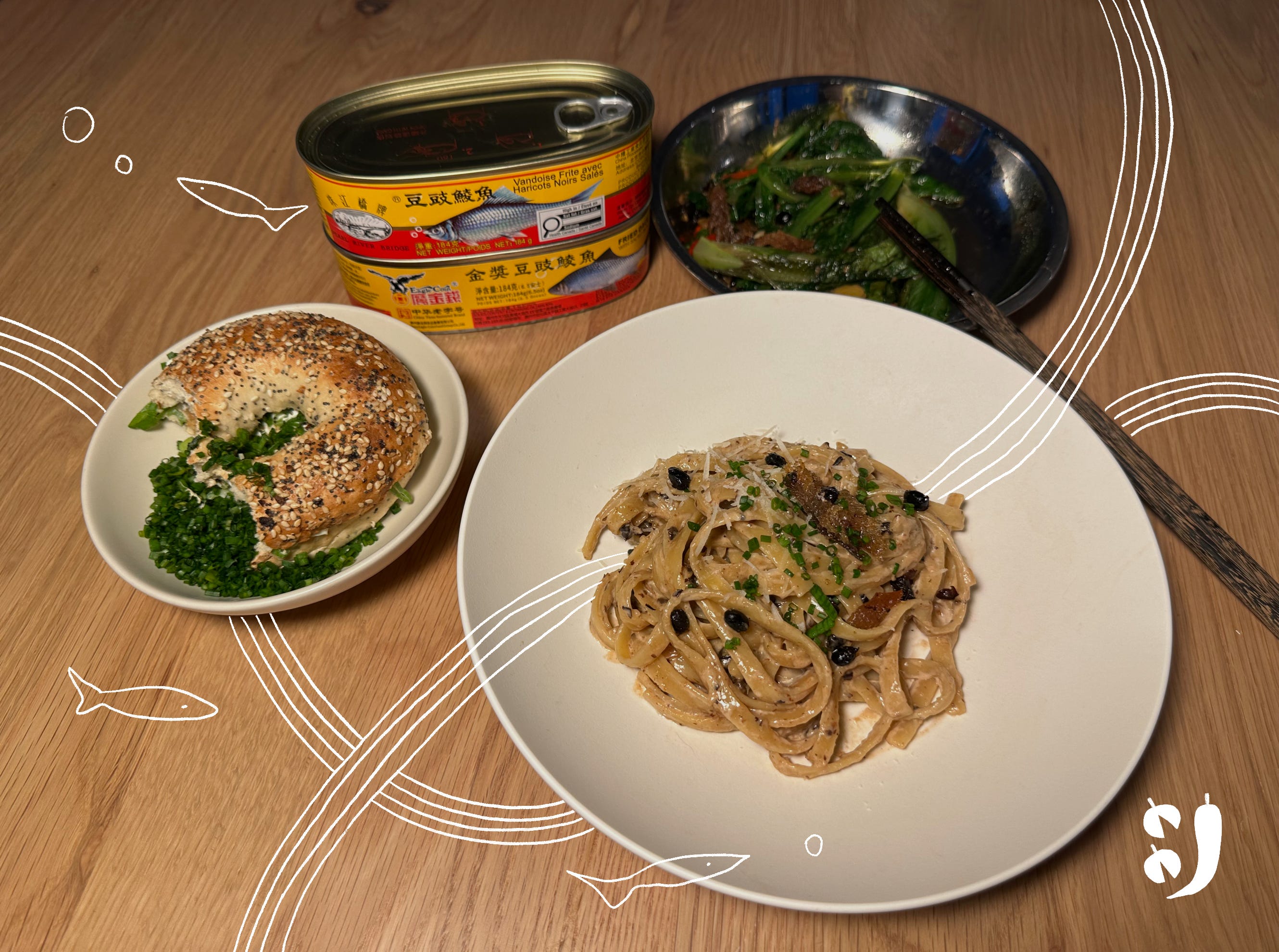
Photo & Illustration by Yanki Kung
Tinned fish has gone from a quiet pantry staple to a bona fide lifestyle choice over the past few years. Thanks to aesthetics-driven TikTok food influencers and clever marketing by companies like Fishwife, what was once a cheap, practical way to eat seafood is now a chic superfood, a pantry flex and, somehow, a ritualized experience. After all, it’s a tiny tin box that you can pop open—savory, briny and oily in all the right ways, begging to be scooped onto a cracker or tossed into a bowl of pasta.
As the Western fascination with tinned fish grows increasingly discerning, enthusiasts and tastemakers have begun venturing beyond the Iberian Peninsula in search of more obscure offerings from farther afield. Among the more curious catches attracting the attention of critics and tastemakers is a Chinese pantry staple: dòu chǐ líng yú 豆豉鲮鱼 (hereafter referred to as Douchi Lingyu), or fried dace with fermented black soybeans.
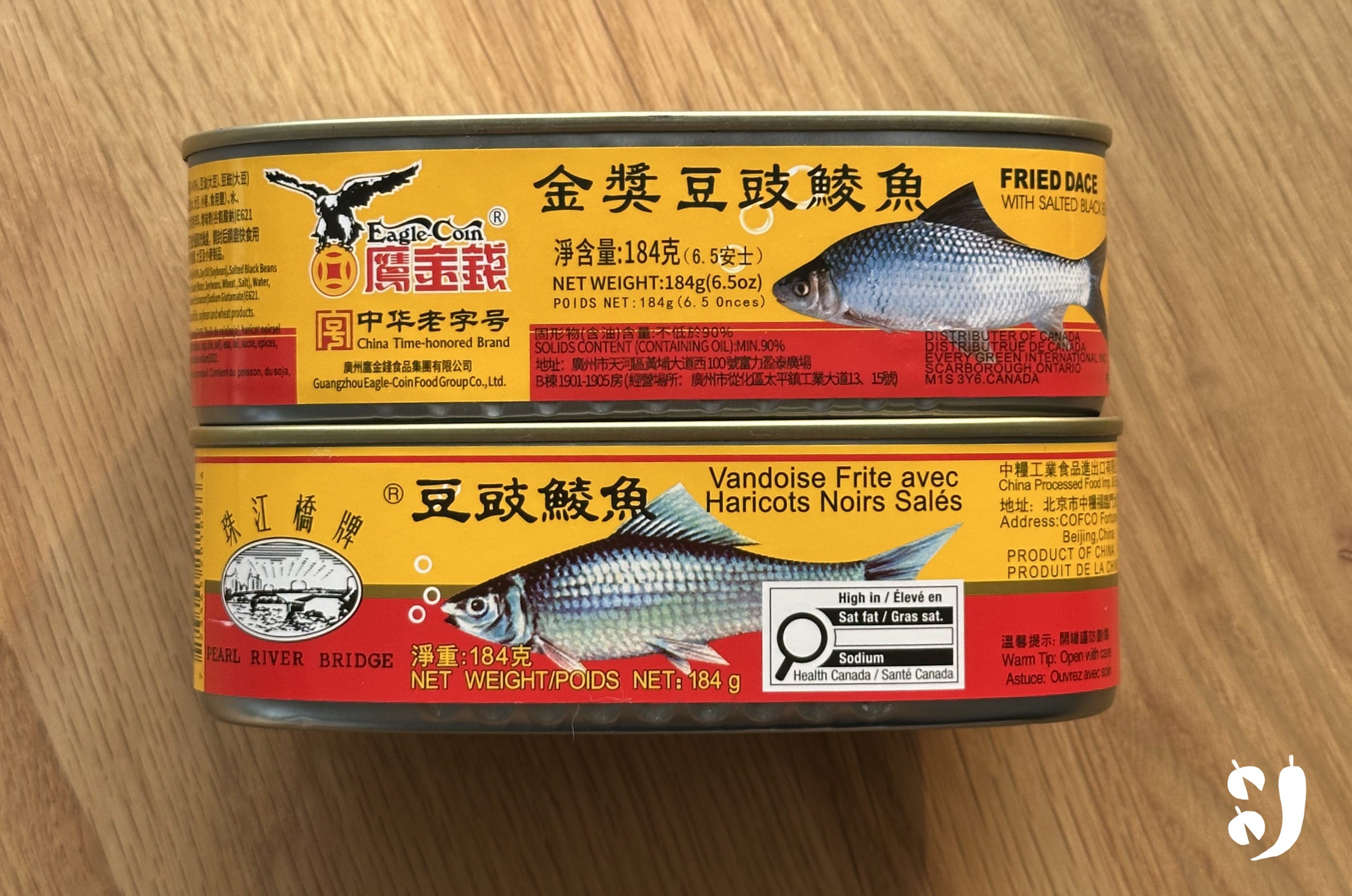
Photo by Yanki Kung
If you put Douchi Lingyu together with all the cans in a Western connoisseur’s collection, it would likely stand out for its size. At about 200g, it is closer to a full meal than a small snack. But, it occupies a different space in the Chinese kitchen: it is rarely served as a final product (though it can be, if heated up), but used to enhance flavor in a new dish—the fish stirred into seasonal vegetables; the oil blended into fried noodles and rice.
The signature flavor of this can is dòu chǐ 豆豉 (hereafter referred to as douchi), an ingredient made from black soybeans—steamed, fermented, salted, then aged. It is nutty, earthy, smooth, and savory (among all fermented bean sauces, it is a lot more reserved than Sichuan classics like dòu bàn jiàng 豆瓣酱 or northern huáng dòu jiàng 黄豆酱). Douchi can take center stage, while it also plays well with others, unique but never overpowering. Like most fermented ingredients in China, douchi has thousands of years of history and countless regional varieties. From Hunanese pork stir-fries to Cantonese steamed spare ribs, douchi quietly backs people’s favorite dishes with vastly different characters. In case you never noticed, the (in)famous Laoganma chili oil also features douchi in most of their products!
Douchi Lingyu is typically known in English as “Fried Dace with Salted Black Beans.” In fact, dace is an overly inclusive term covering numerous species across genera and families. Yet lingyu is a specific fish found exclusively in southern China and Vietnam. In the late 19th century, many Cantonese emigrated to Southeast Asia to make a living. They would fry this local catch and soak it in oil to preserve it, along with douchi for extra flavor. Sealed in clay jars and brought onto the ships sailing away from home, this practical invention helped workers survive the long journey and adjust to a new life in foreign lands.
When Douchi Lingyu was first canned, it was a luxury. But today, the wrinkled fish skin and tender fried bone, chewy fillets drenched in the rich nutty oil have become a staple in Chinese kitchens all over the world.
The most classic way of cooking it, arguably, is using it to elevate your everyday veggies like string beans and lettuce. In Cantonese-speaking regions, Douchi Lingyu to celtuce leaves (also known as A-choy and yóu mài cài 油麦菜) is like anchovies to romaine lettuce in a Caesar salad. The earthy and mildly bitter taste of celtuce leaves and the fatty fried fish complement each other just right.
Not only does it accompany any home-style Chinese dishes well, Douchi Lingyu also blends seamlessly into dairy products like cream and cheese—see Caiwei’s pasta recipe below.
From traditional to innovative, we provide three recipes here that we actually made and loved.
The Classic: Stir-fried Celtuce Leaves with Douchi Lingyu (Yanki’s recipe)
This could be THE Cantonese veggie dish.
As a picky kid who couldn’t appreciate any bitter vegetables or the funky smell of seafood, I would break my rules for this one dish: Douchi Lingyu with celtuce leaves. Douchi softens the fishiness of lingyu and takes the bitterness of celtuce leaves away, leaving the dish with a rich yet mellow taste that’s palatable for diners of all ages. When I make the dish myself, I love to double down on the garlic and douchi for extra flavor!
Here’s my personal recipe for this Cantonese stir-fry classic:

Stir-fried Celtuce Leaves with Douchi Lingyu
(1) Different brands have different salt content! Our recipe should work with mainstream brands like Eagle Coin (鹰金钱) or Pearl River Bridge (珠江桥). But if you are sensitive to salt content, make sure to try the fish and beans before using it.
(2) If you want a stronger garlicky flavor throughout the dish, use minced garlic. If you enjoy eating fried garlic in larger pieces or prefer getting rid of it, use crushed garlic. There is no such thing as too much garlic—feel free to add more!
Photo & Illustration by Yanki Kung
- 1 lb celtuce leaves (A-choy/youmaicai)
- 1 Douchi Lingyu fillet(See Note 1)
- 2 tsp douchi from the can
- 2 tsp oil from the can
- 1 tsp sliced ginger (4-5 thin slices)
- 1 Thai red chili, chopped (optional)
- 3 cloves of garlic, minced or crushed (See Note 2)
- 1 tsp cooking oil
- 1 tbsp soy sauce
- 1/2 tsp ground white pepper
- Step 1Trim the bottom of the vegetable and rip it into thirds (5-6 inches). Cut the stem in half. Roughly separate them into stems and leaves. Wash thoroughly and dry.
- Step 2Remove the backbone from the fish and tear the flesh into bite-sized pieces.
**The fish is deep-fried thoroughly, so deboning is totally optional. Feel free to use every bit of it! - Step 3Heat the wok over high heat until it’s ripping hot. Add cooking oil and swirl the wok to spread the oil evenly.
**This is the “hot pan, cold oil” method, the foundation of Chinese stir-fries! - Step 4Add garlic and ginger, stir for 5 seconds, and add shredded fish, douchi beans, and oil from the can; mix everything.
- Step 5Add the stems and stir. When the stems soften up a little, add the leaves. Cook everything for 1 minute.
- Step 6Add soy sauce and ground white pepper, then stir.
- Step 7Remove the wok from the heat and stir in the red chili slices. Voilà!
Dace & Schmear: Douchi Lingyu Scallion Cream Cheese Bagel (Yanki’s recipe)
The morning after I made the celtuce leaves stir-fry, I still had half a can of Douchi Lingyu lying in the fridge. I toasted my bagel and made scallion cream cheese as usual—but what if I put the fish on top?!
As it turns out, this may be the easiest way to enjoy Douchi Lingyu, and certainly the closest to the Western tinned-fish tradition of putting something oily and vaguely luxurious on bread. Unlike the dainty little tins favored by artisanal seafood brands, Douchi Lingyu tends to come in generous portions, swimming in enough fragrant oil to dress several meals. The bagel’s dense chewiness, the cool tang of scallion cream cheese and the salty, nutty richness of the fish make for an improbably harmonious combination. No cooking required, unless you count toasting a bagel, which I don’t.
Should we ever open a deli, Douchi Lingyu scallion cream cheese will be on the menu. I am prepared to stake our reputation on it.

Dace & Schmear: Douchi Lingyu Scallion Cream Cheese Bagel
- 1 everything bagel
- 1/2 Douchi Lingyu fillet
- 1 tsp douchi from the can
- 1 scallion, finely chopped
- 2 tbsp cream cheese (herb & garlic or plain)
- 1/2 tsp Trader Joe’s Everything but the bagel seasoning (or any other crunchy topping you like!)
- Step 1Cut or tear the fish into bite-size pieces
- Step 2Cut bagel in half and toast it.
- Step 3Spread cream cheese evenly on the bagel and decorate it with the fish, Douchi beans, and scallion.
- Step 4Finish with Everything but the bagel seasoning or your crunchy topping of choice for extra texture!
The Canto Alfredo: Douchi Lingyu Creamy Pasta (Caiwei’s recipe)
This recipe came after I watched the convenience store challenge in the first season of The Divine Dish, a popular Chinese cooking survival show. In the challenge, about a dozen eliminated chefs were tasked to create a fine dish out of convenience store ingredients, and Douchi Lingyu cans became a popular choice many chefs resorted to. Indeed, when resources are limited, Douchi Lingyu is almost a cheat code for attaining rich, complex flavor with minimal effort. I tried my recipe when I was staying with my friend Yufeng for the first time, when we were craving a late-night snack but had very few things in his pantry.
The result turned out to be surprisingly rich—the nuttiness of douchi meshed really well with the cream, and the Parmesan really tied the flavors together. Since then, I have cooked this recipe many times. I think this might be one of my new favorite pasta recipes.

The Canto Alfredo: Douchi Lingyu Creamy Pasta
- 1 Douchi Lingyu fillet
- 2 tsp douchi from the can
- 1 tsp oil from the can
- 1/2 lb dry fettuccine or linguine
- 1 cup heavy cream
- 3 cloves of garlic, minced
- 1/2 cup finely grated Parmesan, plus more for garnish
- 1 tsp chives, sliced for garnish
- 1 tsp soy sauce
- 1 tsp vegetable oil
- Step 1Boil pasta for 2 minutes less than the recommended cooking time. Reserve 1/2 cup of pasta water.
- Step 2Tear the fish into bite-size pieces using a fork or hand.
- Step 3Heat the pan until hot. Add the cooking oil and spread it evenly.
- Step 4Add garlic. As it starts to sizzle, add douchi and oil from the can to bring out the aroma.
- Step 5Add heavy cream, soy sauce, and a splash of pasta water. Blend the sauce with an immersion blender until it’s mostly smooth.
**If your immersion blender cannot be used directly in the cookware, carefully transfer the sauce into a suitable heat-safe container to blend. - Step 6Pour the blended sauce back into the pan. Bring it to a simmer over medium heat until it thickens. If it accidentally got too thick, add a little more pasta water.
- Step 7Lower the heat and add the grated Parmesan as you stir it into the sauce. The finished sauce should be able to coat the noodles evenly.
- Step 8Add pasta to the pan and toss it over low heat. Taste and add salt to adjust if needed.
- Step 9Plate the pasta and finish with douchi beans, fish pieces, chives, and extra Parmesan. Now it’s ready to serve!
***This was actually our first time trying to take recipe photos! Special thanks to our friend Yufeng Zhao for direction and photography support.
About writers:
Yanki Kung is an artist from Shenzhen, China. She is currently based in Toronto, arguably the capital of Chinese food in North America. With a background in cultural anthropology, she now illustrates, tattoos, writes, does stand-up comedy, hosts a podcast, and cooks at a Japanese restaurant.
Caiwei Chen is a writer, journalist and critic from Xiangyang, China. She currently lives in Sunset Park, Brooklyn, where she finds therapy by wandering through the grocery stalls along 8th Avenue. She also reports on tech, AI, internet and thinks about how these things impact society more broadly. She has, at various points, been the designated China woman at an American media organization. She is more online than she likes to admit.
After reading this article, I made myself a bowl of instant noodles with tinned fish and the sauce from the tin for lunch today! Thank you for the inspiration!
douchi linyu is one of my favorites. I also enjoy the roasted eel. All of these are so reasonably priced--I had once seen a can of Spanish brand eel that costs $43.99 at a grocery store.