


Welcome back to Numb and Spicy!
In this issue: I explore the Chinese understanding of terroir through a monthlong road trip with my parents, tracing the food that shapes a place’s identity and the people who call it home.
Illustration by Yanki Kung
1
A WeChat notification lit up on my screen. My mom had tagged me in our family chat of five, demanding immediate attention. It was only the three of us, but both my parents had two accounts, one too many for two retirees with barely any urgent business whatsoever. Five did feel like a more appropriate number for a group chat, though. Three seemed slim.
It was 10 p.m. in China. What could possibly be on my mom’s mind? I tapped the voice message bubble:
“Hey! I think you paid for those pears a couple months ago, when we made that quick stop in Zigui on our road trip. Can you find that transaction in your payment history and maybe the fruit seller’s phone number? The pears were REALLY good. I want to order some more.”
Okay. My dad is okay. No health scares this time, at least. But how good were those pears? I obliged and went through my transaction history one by one in search of the fruit seller.
The fruit shop bore no name and sat next door to our hotel in Zigui, a river town now administered under the city of Yichang in western Hubei province. We drove through the town on a recent road trip. In 1998, the central government relocated the entire town of around 100,000 downstream to accommodate the Three Gorges Dam, then the largest civil engineering project in China and still the most productive hydroelectric dam in the world.

Now the old town of Zigui is submerged entirely under water, countless homes and memories lost to the reservoir. But before I had any idea about its fraught history, I had known that the area produced oranges, lots of them.
An uncle-in-law grew up near Zigui, so every time he traveled home and returned to Wuhan, truckloads of oranges followed. My mom and aunt would examine each specimen with scientific rigor, inspecting the peel’s pigmentation and gently squeezing the fruit to test its firmness. They would then sort them by ripeness, pack them into an assortment of corrugated boxes (saved, naturally, out of survival instinct) on the balcony in the winter cold, and slowly work through the bounty for weeks.
2
Oranges are usually a winter fruit in our region. Given how strictly my family observes the fruit calendar, their commanding presence so early in July felt disorienting. Stacked high on wooden street carts and huddled in woven baskets, could these summer interlopers live up to the spell that Zigui oranges have held over us for decades?
If fruit is a religion in China (and it absolutely is), seasonality and provenance are its core tenets. Chinese consumers know by heart the prime season for local fruit, and increasingly for foreign imports too, like cherries from Chile, Australia, and North America.
Chinese shoppers also identify their fruit by where it comes from. Take apples. American buyers might seek out specific varieties like Honeycrisp (yum!) or Red Delicious (which is anything but delicious). Chinese shoppers are more likely to look for apples from certain geographies like Yantai on the maritime hills of Shandong or Aksu in the desert oasis of southern Xinjiang. Both places are blessed with abundant sunlight.
Over time, the place—a city, a town, or some loosely defined area—becomes a brand in its own right. Occasionally, the fruit label becomes more known than its place of origin. Most fruit connoisseurs in China likely know about Yangshan shuǐ mì táo 水蜜桃, a peach so indulgingly sweet, tender and juicy that you have to eat it over a sink. Yet most of them likely would struggle to pinpoint Yangshan on a map. For the record, it’s a small town under Wuxi in southern Jiangsu.
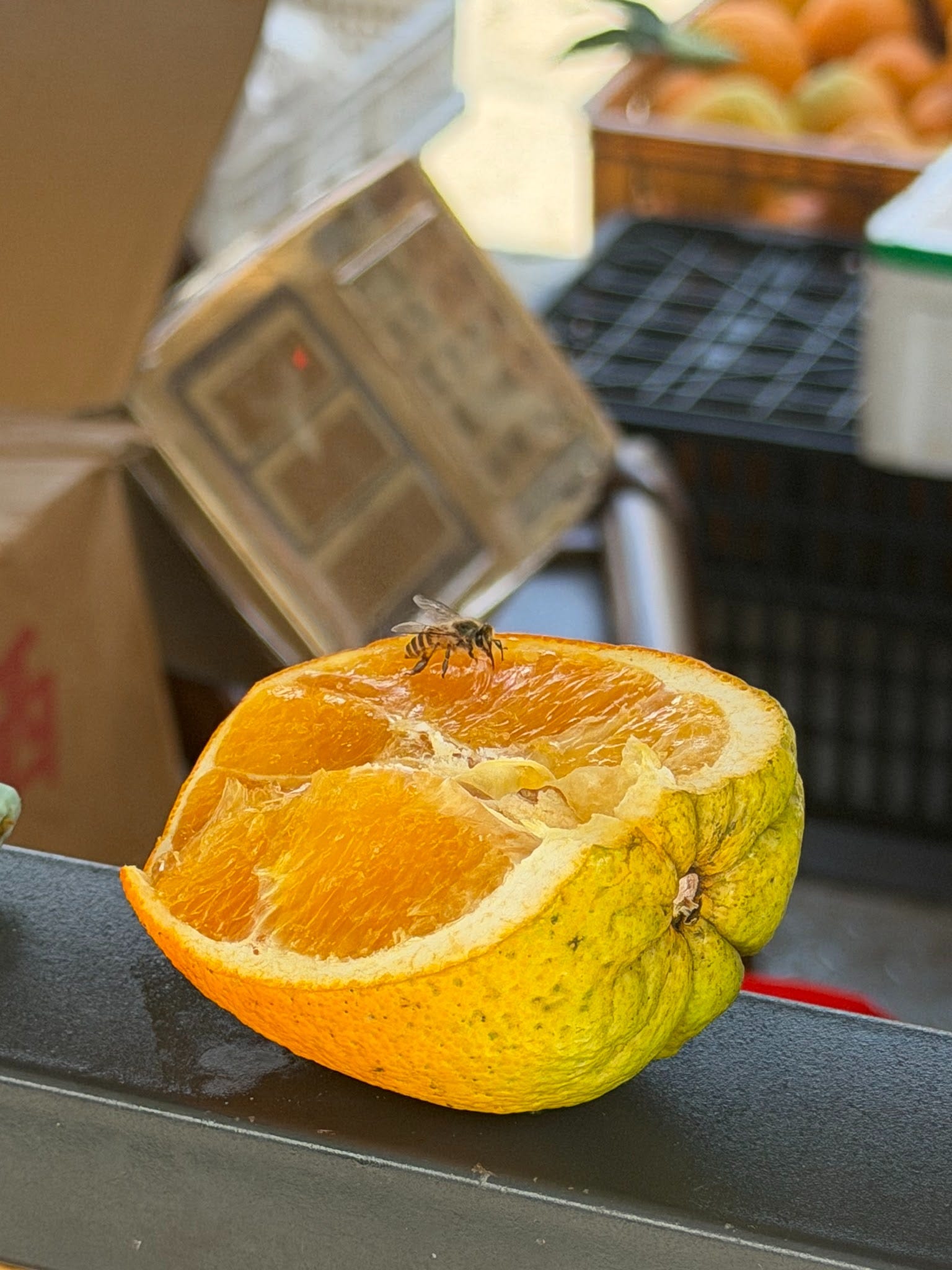
By this logic, Zigui begets Zigui cheng (orange) 秭归橙, which in turn shapes the town’s reputation as a citrus capital. The local orchardists have figured out how to make fresh oranges available year-round. But did we really need oranges in the height of summer, when loquats were in full swing downstream in Dangyang, another town under Yichang, and crisp plums reigned upstream in Wushan, Chongqing, beyond the gorges?
This mapping of a place onto its edible abundance is not limited to the Three Gorges area or fruit. The association is so ingrained that anyone in my family can readily name an ingredient associated with most cities and towns around us. Honghu and Caidian are known for their mellow, sweet and perfectly nine-holed lotus root; Xiaogan for its sticky rice, often fermented into rice wine; Fangxian for its xiāng gū 香菇 (aromatic mushroom in Chinese, often known by its Japanese name, shiitake in the Western world); Enshi for its soft yet chewy mountain potatoes.
A place is inseparable from what it grows. The French concept of terroir—which I first encountered on a high school exchange trip to Paris and, naturally, Bordeaux—focuses heavily on subterranean geology and is typically something to be uncorked and consumed. In recent years, the term has quickly expanded to other gourmet staples like single-origin chocolate, specialty coffee, and whatever else we now assign tasting notes to. Its closest Chinese equivalent, shuǐ tǔ 水土 (literally, water and soil), feels more pervasive. It encompasses not only how produce tastes, but also how people interact with their environment, survive, and, hopefully, thrive.
Yī fāng shuǐ tǔ yǎng yī fāng rén 一方水土养一方人: “A particular soil and water nourish a particular people.” Think of this as a collective, more geographically-rooted vision for the famous “You are what you eat” or for its 19th-century French predecessor by Brillat-Savarin, “Tell me what you eat, and I will tell you what you are.”
But in the Chinese understanding of shuitu, there is a deep sense of physiological co-evolution with one’s environment. The traditional wisdom goes something like this: If your family has historically called the central plains home, sudden binges on seafood might leave your gut perplexed. Similarly, if your diet consists of peppers of various kinds to deal with the cold and dampness, switching to pizzas and burgers overnight is asking for trouble.
By the same logic, traveler’s stomach is known in Chinese as shuǐ tǔ bù fú 水土不服, literally an inability of one’s body to work with the local water and soil. And by extension, it also describes a person or a company struggling to acclimate to a new land or market.
Perhaps this reflex of mapping places through shuitu explains why, when I first moved to America, I tried to do the same with New York and its immediate surroundings. But the effort did not go far beyond matching the Hudson Valley with apples and ducks and Vermont with maple syrup and cheese. It felt like deliberate labor compared to China, where such associations were already deeply steeped in the collective consciousness.
3
Before Zigui was known as an orange hub, tangerines were the local pride. Qu Yuan (c. 340 BCE – 278 BCE), one of ancient China’s foundational poets and easily its closest equivalent to Homer, wrote at length about the local citrus. As proof of Qu’s staying power, he single-handedly spawned the Dragon Boat Festival. Legend goes that locals hurled zòng zǐ 粽子 into the river, where he committed suicide, so the fish wouldn’t eat Qu Yuan’s dead body. Clever, huh?
Qu saw in tangerines a humanistic determination in his poem “In Praise of the Orange-Tree.”
“Fairest of all God’s trees, the orange came and settled here,
Commanded by him not to move, but only grow in the South Country.
Deep-rooted, firm and hard to shift: showing in this its singleness of purpose...”
(Translated by David Hawkes)
Citrus cultivation and trade continued to thrive through the Western and Eastern Han (202 BCE – 220 CE). The obsession with this local citrus even prompted the imperial government to set up an official post, jú guān 橘官, in the adjacent counties, to source and supervise the shipment of tribute tangerines to the capital, another proof that fruit has always been a religion in the Middle Kingdom.
Fast forward to the 1970s, the local red tangerine ran into trouble. Beloved as it was, the fruit was seedy, pulpy, and prone to gluts that rotted in winter storerooms before they could find markets outside the area.
Partially due to its legacy in citrus cultivation, the area was picked and groomed for navel oranges. Researchers from Wuhan and Chongqing arrived with California imports like the Robertson and Newhall navel oranges, looking for a microclimate that could coax out their sweetness without freezing the branches off.
They found it in the Three Gorges. Shielded from chilling winds by the mountains, the valleys trap warm air while the waters of the Yangtze act as a thermal reservoir. The American varieties did not just adapt. They thrived.
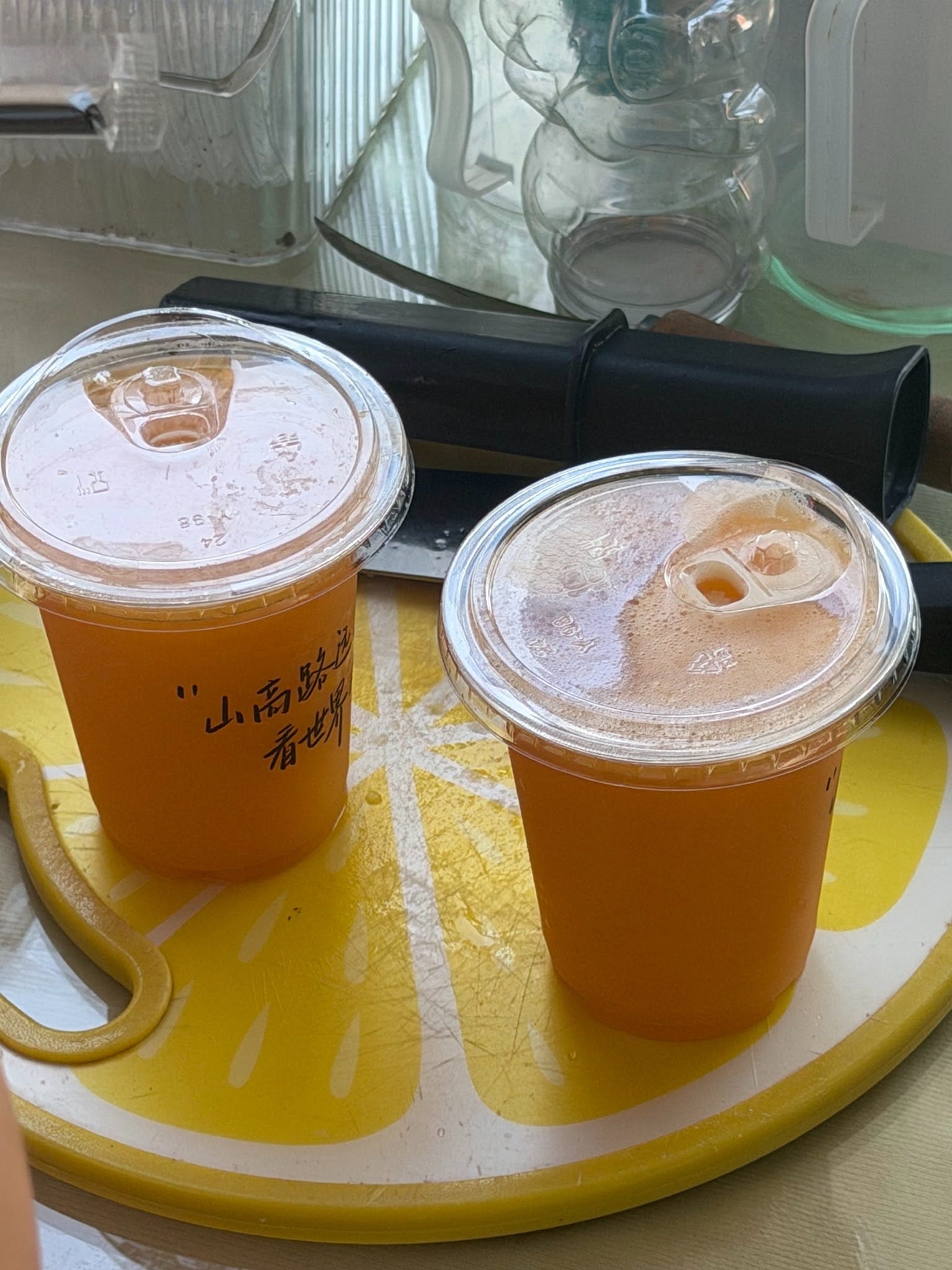
Decades later, late cultivars like the Australian Lane Late transformed the valley yet again. Today, oranges hang on the terraced slopes well into spring and summer, solving the mystery of our July sighting. And they sure held up Zigui’s reputation. While the oranges didn’t make the cut for my mom’s repeat order, the freshly pressed juice from the same stall had us gaping at each other in disbelief, followed by an incredulous interrogation of the owner to confirm that no sugar had been added.
Whether tangerines or oranges, citrus has long occupied a central place in the Chinese imagination of terroir, serving as a metaphor for the shaping of agricultural produce as much as human character. The foundational text for this worldview was laid down over two millennia ago in the Annals of Master Yan:
Jú shēng huái nán zé wéi jú, shēng yú huái běi zé wéi zhǐ
橘生淮南则为橘,生于淮北则为枳
“The orange tree grown south of the Huai River is an orange; grown north of the Huai it becomes a trifoliate orange. The leaves are similar, but the taste of the fruit is different. Why is this? The water and soil are different.”
(Translated by Burton Watson)
Botanists have long debunked the premise, proving that the sweet mandarin orange (Citrus reticulata) and the bitter trifoliate orange (Poncirus trifoliata) are completely distinct species. Yet the ancient wisdom survived the scientific truth. People continue to seek out “oranges grown south of the Huai.”
But along the Three Gorges, the successful introduction of oranges to tangerine-land proves the reality of shuitu is far more complicated than immutable. Perhaps shuitu is not so much a fixed destiny but an ongoing negotiation between nature and human innovation, where even imports from “strategic rivals” could take root and transform the landscape.
4
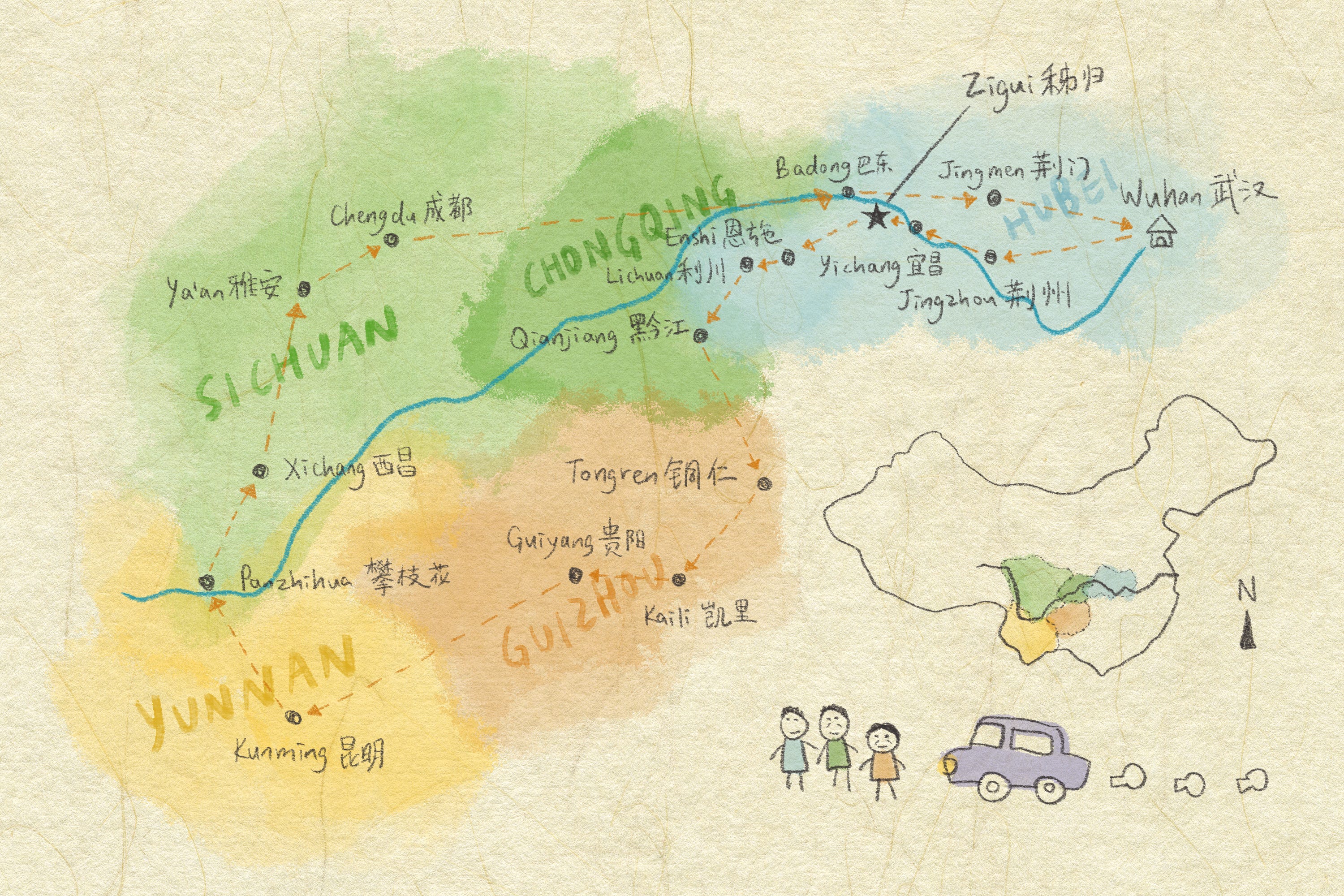
Illustration by Yanki Kung
Zigui was just one waypoint on an overly ambitious family road trip earlier this summer.
We set out from our home city of Wuhan (hot dry noodles) in central Hubei, cutting through the province to the west through Jingzhou (fish cakes), Yichang (fatty fish), Zigui (orange!), Enshi (green tea), and Lichuan (black tea) before crossing into Chongqing’s Qianjiang District (chicken giblets). From there, we reached Tongren (mó chá 抹茶/matcha) in Guizhou, then Guiyang (crispy pork lardons) via Kaili (sour broth hotpot). Continuing westward, we made our way to Kunming (rice noodles), then completed the loop by driving north through Panzhihua (mango), Xichang (satellite?), and Ya’an (carp) before reaching Chengdu (sweet water noodles). From there, we stopped in Badong (beef hotpot) and Jingmen (sesame pastries) on the final stretch of the trip.
Yes, it was a lot of towns and cities and lots of driving (thank you, Dad). The expedition also lasted for over a month (arguably a month too long to test the limits of my filial piety), but we all made it back in one piece.
My parents were easy to travel with, apart from their tiny appetites, which meant we could only have two meals a day, practicing intermittent fasting without intent. We could also afford the highway tolls, despite my dad’s running complaint about how expensive they were. Then again, almost the entire trip, barring the few hours through the central plains in Hubei, was a seemingly endless succession of hills and mountains. The engineering costs for these highways must have been staggering, I thought to myself. We were just paying our dues.
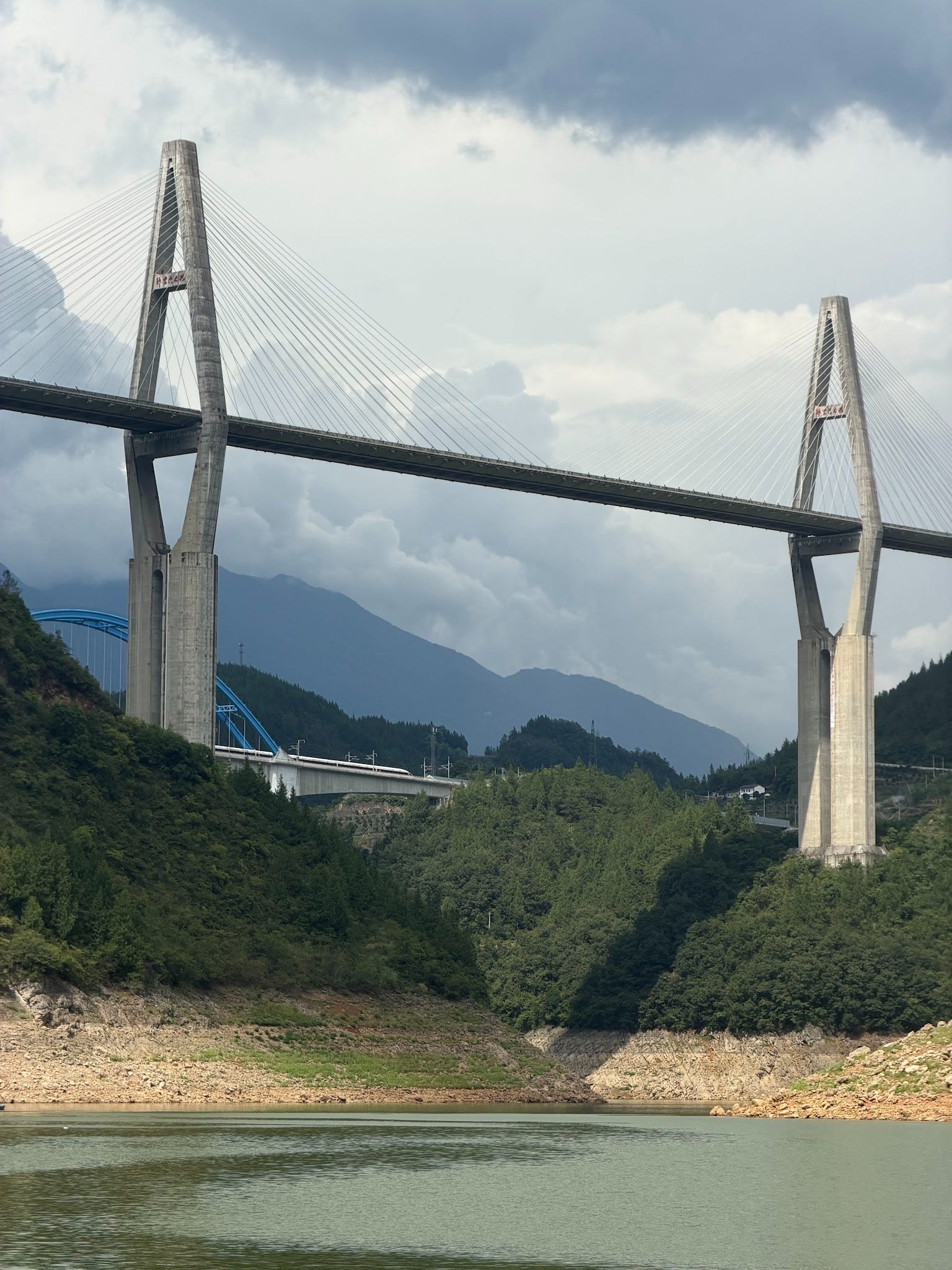
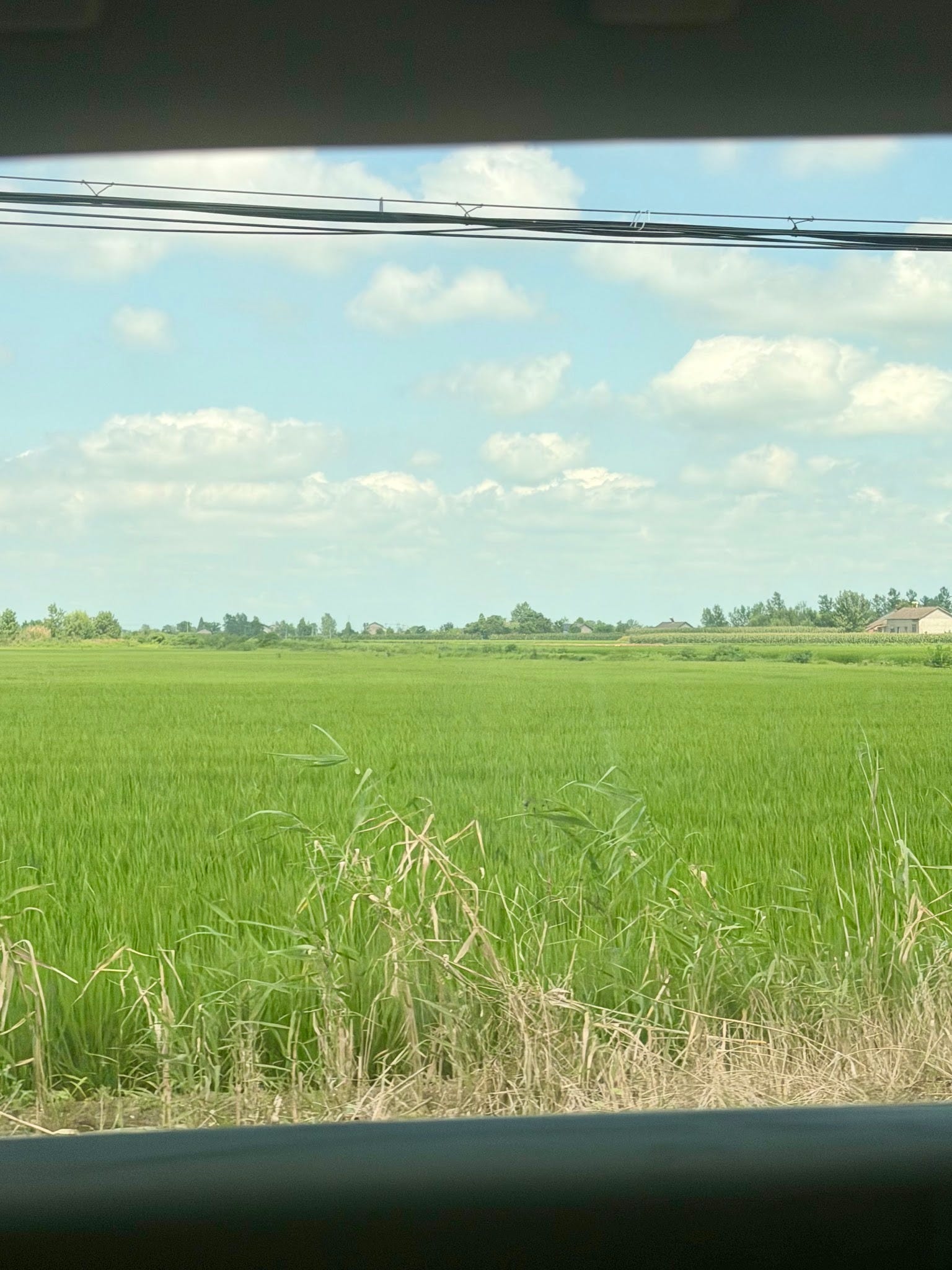
In between tunnels stretching for miles and bridges suspended high above river valleys, we occasionally zigzagged through provincial roads and county lanes. The real fun began on the narrow back roads that cut across fields. Rolling down the windows, I could almost reach for the heads of ripening rice. The most frequent question in the car was, without a doubt, “What is that?”, invariably from me in the back seat and my dad in the front. Mom was our resident expert on all things agricultural. This was mostly because my dad grew up entirely in the city, whereas my mom split her childhood between the city and the countryside.
Not far past Zigui, we drove through a section of a river valley, where almost every house had thousands of cut pieces of some fruit or vegetable laid out front, all neatly in halves. They were slightly larger than apples. Their flesh glowed the bright orange of persimmons. The skin was bright green like a Granny Smith, turning purplish-brown as it oxidized in the sun. After much guessing, we pulled over by the road, rolled down the window and caught the eye of a local farmer.
“Hi! Just curious, what are these you’re drying?”
“Mù guā 木瓜!”
“Oh they look different from papayas!”
“Oh, it’s not the fruit papaya. They are for medicinal use.”
It turns out that we were driving through Changyang County, the core growing region of Chinese medicinal quince. The local harvest is among the most reputed, recorded in local gazetteers since at least the late nineteenth century.
Not only sold as raw ingredients to Chinese herbal medicine producers, the fruit is also used by locals, fresh or dried, in salads and to make a medicinal liquor to warm up the body and fight the cool humidity in the valleys.
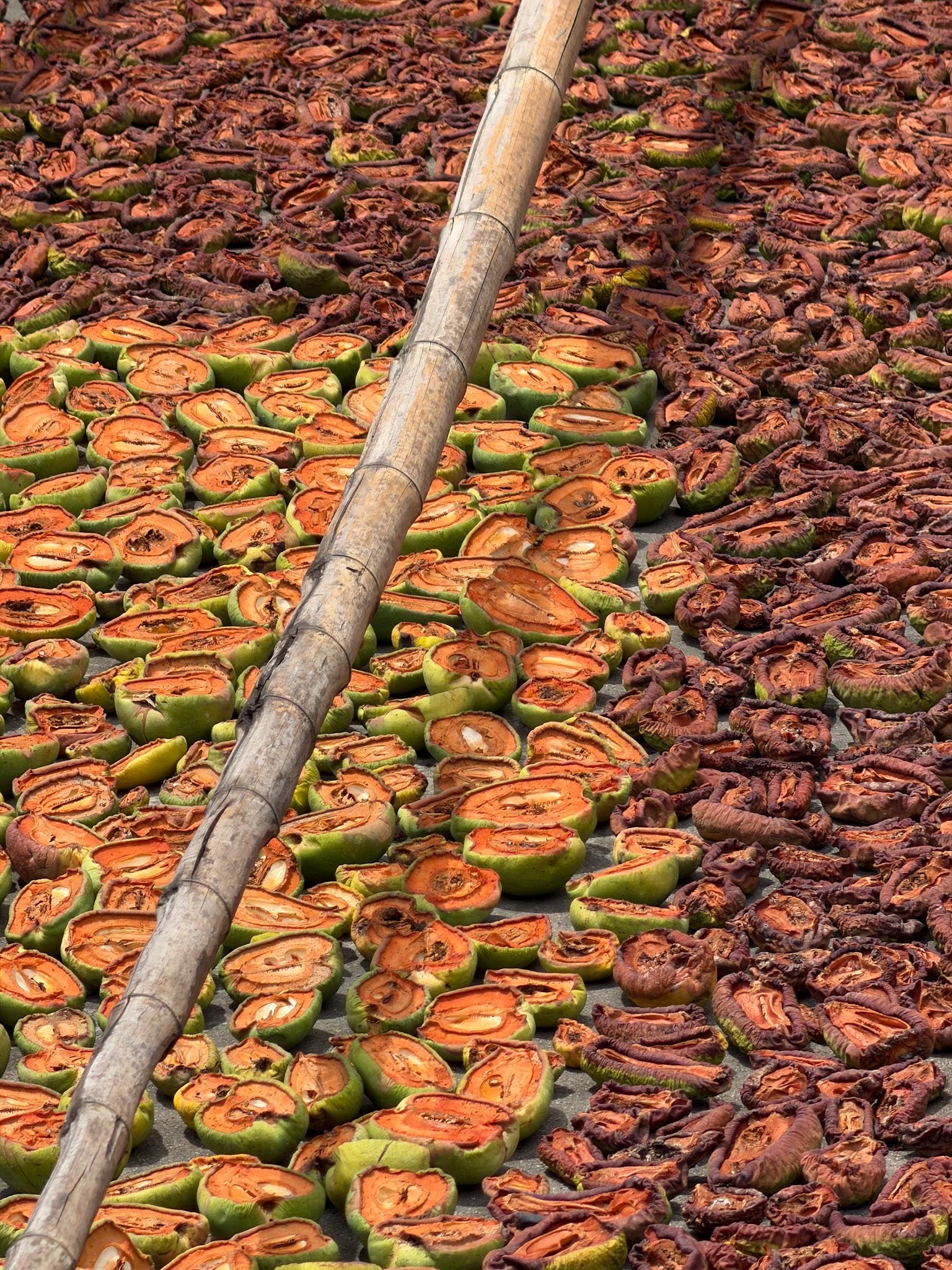
The harvest is a race against time, according to the local farmer. The fruit is typically picked in peak summertime, when its skin turns yellow from green, lightly aromatic yet not fully ripe. It is the window when its key therapeutic compound, oleanolic acid, is at its peak, hence the miles of drying plots along the road. Once dried, the flesh darkens to a crimson red or dark violet, and its skin wrinkles, earning its name zhòu pí mù guā 皱皮木瓜, or wrinkled Chinese quince.
Both my parents were delighted by this newfound knowledge. For my mom, it was the satisfaction of knowing and adding mugua to her own mental encyclopedia, and for my dad, it reinforced his ever-growing devotion to Traditional Chinese Medicine since herbal broths helped manage and even cure his coronary problems.
For my parents, shuitu is never an abstract combination of latitude, longitude, elevation, or geographic borders, but informed by produce: which valleys grow the sweetest oranges or pears and which hills yield the most potent medicinal quince. This knowledge is not acquired wholesale from reference books, but assembled piecemeal through detours along country roads, conversations in local markets and discoveries made in tiny restaurants.
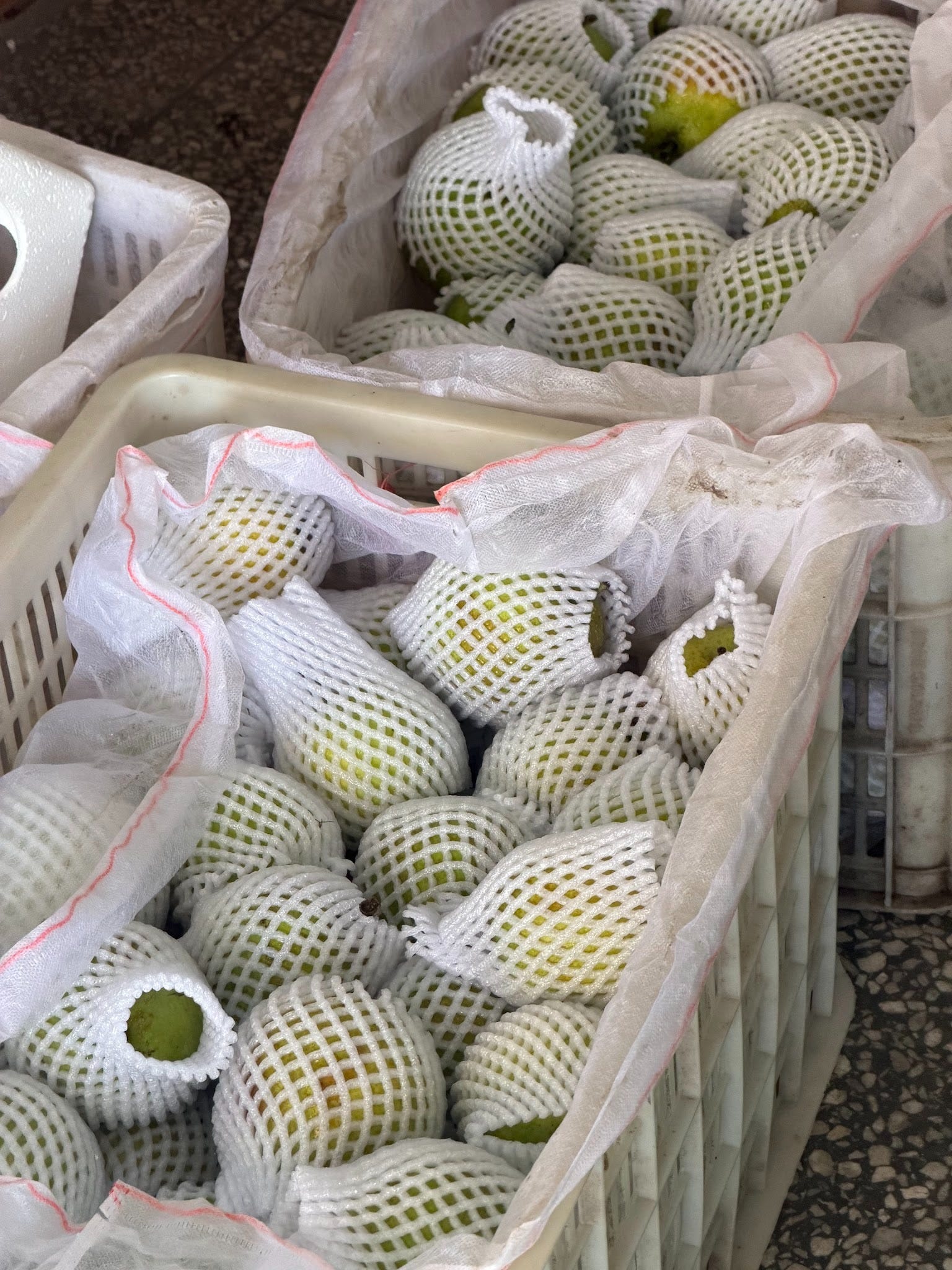
By the time I dug through my payment history and helped my mom locate the fruit seller, the prime window for those mountain pears had already closed.
But perhaps that is exactly the appeal. A harvest cannot be summoned on demand. There’s always next year, when the cycle repeats itself, or another stop along a county lane, where another obsession awaits.
About Writer
Xiong Yang is a food and travel writer and journalist from Wuhan, China. He is currently bouncing between places in China with good food (which is practically everywhere) and New York (where he cat-sits for old friends). A genetic test has confirmed his fondness for high-calorie food, which is true, so he’s trying very hard to manage this vice with lots of tennis.
That’s it for this week’s issue! Coming up next, we have a special crossover with Peking Quack: Xinrou Shu visits one of Shanghai’s hardest-to-book restaurants and muses on how the endless chase for novelty has brought overseas reinterpretations of Chinese food back to China, repackaged as exotic, cosmopolitan dining experiences.
Until next time!
Reading this story feels a bit like reading Peter Hessler’s Country Driving, but with a focus on food, haha. The comparison between China’s tradition of closely linking food to place and the American experience is fascinating, and it has a lovely sense of humor as well.
The piece also left me wondering: I’m sure these foods owe a great deal to the local shuitu (水土), but how much also comes down to economies of scale, historical traditions, or a little business opportunity that arose by chance? As the author points out, the introduction of nonnative varieties and the interaction between people and nature also play a role. Of course, Yang captures this complexity, too.
I really enjoyed this piece.